
Prince George's Current Owner Card
The Real Property Search from Maryland SDAT offers the first official look. Its Owner Name field reflects the last recorded deed. Expect just the first line of that name. The card then ties the label to the parcel, premises address, mailing address, deed reference, assessment, sale, occupancy, and dwelling details. Take each field name literally and copy it exactly.
| Owner Name | Name shown on the last recorded deed, often with abbreviations |
|---|---|
| Mailing Address | Destination for notices; not proof of residence |
| Premises Address | Location assigned to the parcel |
| Liber/Folio | Book and page reference for the deed |
| Sale Date and Type | Reported transaction clues, not an independent title finding |
| Owner Occupancy | Assessment-program flag, not a live occupant directory |
Abbreviations like ET AL, ET UX, T/E, or /WF often appear in the owner record. Carry them into the deed search unchanged. They can point to extra parties or a marital title form the one-line assessment display never fully explains.
Check Prince George's Owner Fields
SDAT Real Property Search asks for Prince George's County plus a search method. Address, PAN, map/parcel, and sales modes are all documented. A general owner-name mode is not. When an address search stalls, drop directional terms and street suffixes. Use the full street name. Try a trailing wildcard. Or leave the number blank to list the whole street.
Do not trust an owner name on its own. Confirm the match through the PAN, map, parcel, grid, legal description, and premises address. A postal city label or ZIP proves nothing about municipal boundaries. The same parcel can carry a mailing address outside Maryland entirely. Treat those gaps as clues, not errors to smooth away.
Confirm Prince George's Ownership Now
SDAT maintains its database daily. No official source states a guaranteed lag after recording. A newly accepted deed may therefore be more current than the assessment display. Verification means tying the SDAT parcel to the newest deed, not just repeating its first-line owner label.
- Record the exact SDAT Owner Name, parcel identifiers, legal description, and Liber/Folio.
- Open MDLandRec, select Prince George's County, and jump to that book and page.
- Check the deed's full grantee line, vesting language, legal description, and recording date.
- Search forward for a later conveyance or corrective deed affecting the same land.
- If an estate or entity appears, use the matching state registry before describing the party.
- Owner of record
- The party named by the official record used for the statement.
- Vesting
- The deed wording that describes how title is held.
- Registered agent
- The listed contact for service on a Maryland business entity, not necessarily its property owner or occupant.
Prince George's Latest Deed Check
The MDLandRec gateway requires a free account with multifactor authentication before recorded deed images can be opened.
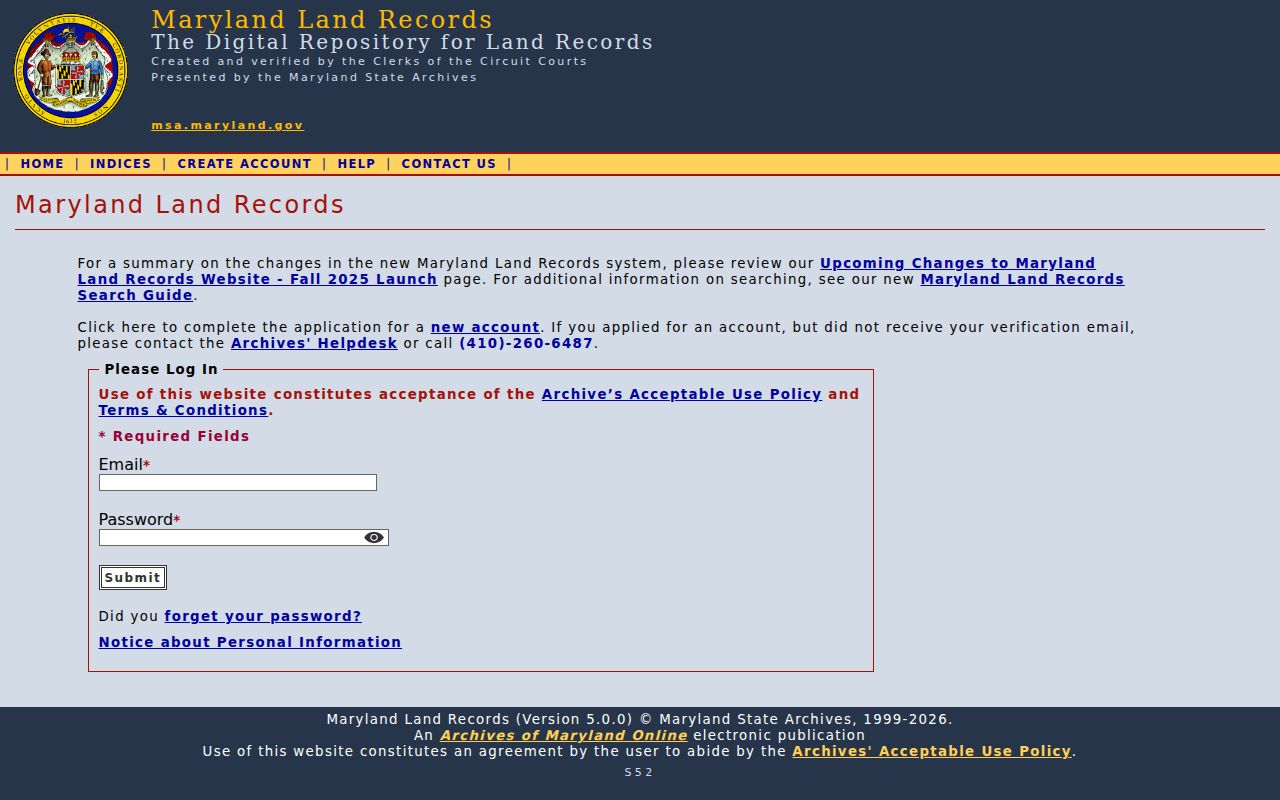
After signing in, start with the SDAT Liber/Folio. That reference produces the fastest match. The deed image may then reveal added grantees, title capacity, a trust or entity name, and the full legal description the assessment card abbreviates.
Entity Owners in Prince George's
An LLC or corporation named on the deed is the current owner of record. A person may still manage day-to-day matters. Maryland Business Express permits searches by Business Name, Department ID, or EIN. Its status and resident-agent details help separate similarly named entities. They also supply an official service contact.
Never turn a resident agent, organizer, permit applicant, lender, or property manager into the owner. Those roles are not ownership. Match the deed's exact legal entity name, punctuation and suffixes included, against the state record. For a trust, the deed's trustee and vesting language matter most. Any guess at beneficiaries should not override them.
Prince George's Estate Ownership Gap
An estate file can explain an owner-of-record name that looks stale. The Register of Wills Estate Search spans 1998 to the present. It can surface a personal representative and docket activity. Opening an estate, though, does not itself change deed title. SDAT may still list the decedent until a later deed or other qualifying update is recorded.
Run the estate search by exact and partial surname. Then inspect MDLandRec for an executor or administrator deed. Keep each source in its lane. Probate identifies authority and proceedings. The recorded conveyance identifies the transfer. That distinction matters most in heir cases.
Mailing Addresses and Protected Owners
The public mailing field is the normal contact route for any parcel matter. It may instead be a business address. It could be a post-office box, a representative's address, or one outside the county. Maryland's Safe at Home Address Confidentiality Program can supply a substitute address with mail forwarding for eligible survivors. A substitute address is working as intended. It is not a clue to defeat.
Owner occupancy flags and mailing data are administrative fields. They cannot prove who is physically present on a given day. Use the owner record for a purchase inquiry, boundary question, estate matter, or civic purpose. Keep any contact tied to that legitimate property issue.
Contact a Prince George's Owner
A concise letter to the SDAT mailing address is the most restrained first move. Identify the parcel or address. State the property reason plainly. Offer a return method. If mail comes back, recheck the newest deed and the entity registry. Do not chase private contact data from unverified sources.
The Maryland Public Information Act can obtain existing records from the agency that holds them. It is subject to exemptions. It does not force an office to conduct private research. It will not build a fresh owner list or resolve a legal title question.
Owner of record is not occupant. Use public owner information for lawful property diligence and civic research. Never use it to harass, threaten, or target a person.
Write a Defensible Owner Result
A defensible owner result starts with naming the source and the field. Prince George's County is no exception. SDAT shows the party as Owner Name on the most recently recorded deed. That entry can lag behind newer transfers. Say so plainly. Then tie the finding to the matching MDLandRec deed. Note whether the mailing address and the premises address differ. Wording like this answers who owns the property now. It does not imply the owner of record lives there.
Keep the search date with the result. Portal records change, and a corrective or later transfer instrument can supersede what you pulled. A parcel can have multiple accounts. One deed can cover several parcels. Spell out that complication rather than shrinking it to a single address.